GIVING NATTO A BAD NAME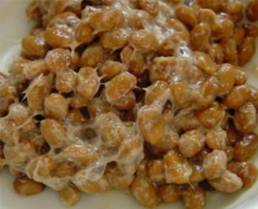 Natto
, though one of my favorite foods, is probably the most maligned item in the Japanese culinary spectrum, especially abroad. It is ugly looking, sticky, stringy, messy, ill-smelling, refuses to stay in place and doesn't actually taste all that great, so as a food it does have its drawbacks.
I've even met quite a few Japanese who don't like it. (But then they usually eat it on rice for breakfast, which I have never done-- you have to put your tongue down somewhere.) And Japanese people are always amazed when they find out
I like natto. Their response would be akin to that of an American saying: "What? You like to chew on gym socks
too?"
So I was surprised to hear that throughout Japan,
natto was disappearing from supermarket shelves as though it were dessicated squid or something. Turns out one of the many psychoparasitic tv programs that constipate the airwaves here (as elsewhere) did a program claiming that
eating natto multiple times a day helps people lose weight fast, so
natto instantly sold out everywhere and kept selling out, until what happened happened. To be honest, I can't say I noticed the big gaps on the supermarket shelves where the gooey beanstuff used to be, since we get our stringy beans from reputably natural sources. There's nothing quite as ‘natural’ as genuinely natural natto…
I also can't say I've noticed all that many Japanese who really should go on a diet; I wouldn't be surprised to hear that Japan is the slimmest developed country in the world. Nevertheless, the general compulsion toward anorexia seems to be spreading everywhere, like a media virus. Speaking of viruses, it turned out that out not only was that tv program typically topically as bland as white rice, it was unscrupulous as well! Floor me, somebody. It wasn't enough that they had to shed sham praise on a food that was already in the gutter, so to speak; they also used the falsified words of a foreign doctor to add credulity to their gooey fakery. (Foreigner and
natto inextricably intertwined-- a lot like my first
natto lunch.)
Some of the international press articles I've read about the scandal call
natto 'pungent' (which is rather euphemistic, actually); others use phrases like
‘natto producers cry foul,’ ‘a strong-smelling food,’ ‘sticky problem for Japan TV show,’ ‘rotted soya beans’ and such like, as the story spreads and humble
natto, already the nadir of foods, plunges to the level of the media.
Well, at least frantic mobs of subjectively overweight folks were induced to scarf down scads of the slimy legumes
, so maybe some will become
natto-lovers and get healthier (all you have to do is get past that long, stringy series of negative first impressions), though most of them will probably never want to look at a fermented soybean again. Poor
natto.