Monday, March 31, 2003


OTSU INCIDENT, PART III: THE MYSTERY DEEPENS


Well, as if directed by the hands that led us through the maze to the grave of Ernest Fenollosa, on this try we made it in no time at all to the very conveniently located and amazingly accessible Otsu Museum of History to see the Otsu Incident exhibition, which you know all about if you've been following this, and if not, we'll wait here while you go back and catch up.

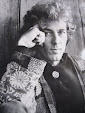
The exhibition was all we expected, and extremely fascinating as history. Prince Nikolai (on left in poster above) and his cousin Prince George of Greece were given the grand tour on that day in May 1889: rickshaws from Kyoto, a tour past the transport canal that goes through the mountain to Kyoto, a steamboat ride out on the Lake to view the famed ancient pine of Karasaki, then back to Otsu where they toured an expo of local products at city hall and George purchased a fine rattan cane.

Then on through the city (very narrow streets, head-high roofs...and no electric poles!) in rickshaws heading back to Kyoto, when Nikolai was attacked by the sword-wielding Japanese policeman (photo on right above), the rickshawmen deflected the blow, and everybody rushed to subdue the attacker, George beating him with his new rattan cane. Then, according to the exhibition, Nikolai was taken to a kimono fabric shop right at the scene, where he was treated for two heavily bleeding but rather superficial wounds to the right side of his head. The attacker (who had struck because he believed Nikolai was reconnoitering for a future invasion by Russia, a not uncommon suspicion at the time) was then taken away and jailed nearby.

The point of the exhibition, however, was that, following imperial family demands for the attacker's immediate execution, several radical lawyers called for a standard modern legal approach and won out, thereby beginning to wrest the Japanese legal system from imperial dominance. According to exhibition data, the attacker died in the same prison a few months later, of pneumonia. The exhibition showed it all: the endless paperwork involved, the princely visaless passports, detailed maps; photos of the princes, the then-mayor of Otsu City, the governor of Shiga Prefecture, the conservative lawyers, the radical lawyers, the kimono shop owner with his imperial medal, the nationally famous superhero rickshawmen wearing the medals awarded by the tsar and the emperor (they also received huge rewards and generous pensions); the actual sword, the bloody handkerchief with a small bit of the corner clipped off (for forensic DNA research on the findings at Ekaterinsberg), the rattan cane, even the original sign from the shop where the rattan cane had been made, but not one single photo or mention, not one word, of Doctor Usui. Strange. I had been looking specifically for further details regarding the story of this hero who had, according to his own version of events, practically saved Nikolai's life, and there was nothing. Even the leading radical lawyer's wife's photograph was there, but nothing of the good doctor. Re-reading Doctor Usui's story, I note that he says (automatic translation): "It [Nikolai] had been transported in the hall of a hotel in the vicinity... I spontaneously placed then my two hands on the left side of the head of the patient and directed my intra-psychic perception inside the wound." Hotel? Left side? Was he actually there? Was the good doctor... the founder of Reiki... indulging in a bit of creative imagination? If not, why was he left completely out of the exhibition? The mystery continues...

~~~~~~~~~~~~~~~~


JAPANESE GARDEN CONTEMPLATIONS

Superb Japanese garden ideas, select Kyoto garden photo tours and more at Marc Keane's inspiring site.

Saturday, March 29, 2003


OTSU INCIDENT, PART II


Last week, you remember, I posted a post about not being able to make it to the Otsu Incident exhibition at the Otsu History Museum, and said I would post about it when we finally made it there. The exhibit ends on Monday, so we decided to go today since Monday would likely be busy for us and Sunday likely busy for the Museum.

So there we were, on our way at last, having been to the Museum before and confident in the normal way of getting there again whenever in our lives we might want to, and we took what appeared to be the same turning as before into the ancient maze of west-side mountain streets that still thread through that part of Otsu, as in all old cities in Japan built around rice paddies (don't get me started on Tokyo), and wound up in some narrow cul de sac under an overpass high in the upper reaches of junglehood, so we headed south, thinking we were lost northward, and wound up in another maze of a big park we remembered seeing as part of the vista from the Museum balcony, and since the upward roads were conveniently closed to traffic we parked and began to walk, but it was getting late; entry to the exhibit closed at 4:30 so we were hustling in what by now we knew was the right direction. Then we saw a map in the park that seemed to indicate that if we continued the way we were going we might not get there, but if we went this other special way we'd get there no-o-o-o problem, and being the trusting souls that we are, we opted for the latter and set off on a stone path into the woods, and I do mean woods, it was Hansel and Gretel in the orient, as the sun was setting and the Museum was closing but whatya gonna do, we had no other plans.

So we plunged on, up and down and in and around through bamboo groves and across stone bridges and up and down stone staircases, and then when we had at last arrived at what appeared to be the end there was nothing like a museum. Instead there was a map on one of those helpful tourist guide poles that said the Museum was back somewhere we'd just come from so we figured forget it and started back, took a wrong turning and, emerging from a wildly overgrown path through tall bamboo, wound up... at the bottom of some stone steps... that led up to the gate... of a temple called Homyo-in, before which an old sign said in Japanese "Grave of Ernest Fenollosa." Sure, I thought. But having little better to do we went up there and through the gate into the grounds of the temple, which had clearly seen much better days, there was a tarp over the roof and all buildings were closed up tight with no one around, and all the gates open, but the view was splendid, as we were in shadow while all below and the Lake was still sunlit.

And over there just ahead a bit was a crudely hand-lettered sign pointing up some stone steps into the forest behind the temple, we went up there into the deepening shadows and sure enough, there was the actual grave of Ernest Fenollosa himself, the most seminal western scholar in Japanese history, and recipient of the highest imperial honor ever bestowed upon a foreigner, among his countless other honors and accomplishments. And here he was resting almost a century now in this very quiet and apparently little-known place. The man was a hero in my own past; countless times I had seen his name in just about everything I'd ever read about Japanese culture. Indeed, part of my reason for being in Japan could be traced back to him and his work. Among many others he influenced Hearn, Pound, Yeats, all the way up to Rexroth, Ginsberg, Kerouac, Snyder in our own day, the list lengthens and widens and his influence goes on. Yet with all my time in Japan I never even knew he was here, at this now declining and unvisited temple that he loved for its beautiful view. (He had become a Tendai Buddhist at this temple (imagine the radicalness of that in Victorian times!!), and spent much time here.

Fenollosa died suddenly during a visit to London in 1906 and in his will requested that his ashes be placed here. The temple still has the telescope, globe, favorite chair, oil lamp and gramophone he left on his last visit, but they wouldn't let us in to see anything; a person on the intercom from deep within who didn't even want to come to the door said they don't show the place anymore. I had the distinct feeling that they weren't all that interested in, or appreciative of, the heritage in their charge.

There were no flowers at the grave, and only a few coins had been placed on the stone base. I left a one-word note pinned to the stone with a twig I cut from a nearby sakakitree. Perhaps just as amazing as Fenellosa being here, and just as generally unknown: right beside Fenollosa's grave is the grave of William Bigelow, scion of a very prominent Boston family, who also became a Tendai Buddhist and was assistant curator (Fenollosa was curator) of the Boston Museum of Fine Arts, to which Bigelow bequeathed perhaps the world's greatest collection of ukiyo-e and other priceless objects of oriental art. But the amazement didn't end there: facing their graves is that of Kakuzo Okakura (Tenshin) who with Fenollosa first cataloged the incredible treasures of Horyuji in Nara, and later wrote the classic Book of Tea. What fascinating stories are here, right here, and not a soul around; nor, apparently, likely to be. Never did make it to the Otsu Incident, but instead stumbled onto something much more profound, that had no doubt been intended all along.

~~~~~~~~~~~~~~~~~


REAL NEWS

Enough. I'm going on a news fast, and instead watch and listen to the Real News, from the earth and the sky and the season. Here on the blue sky mountain the air is charged with the open-armed excitement of Spring; the plants know something big is coming; they can feel it, they are it as the perfume of life rises from the earth: their limbs are springy and vibrant in the softening wind, each node a swelling pink as on the peach and cherry trees, or white as on the plum; the slender apricot limbs are dotted along their lengths with tiny crackled garnets that glow in the morning sun; the weeping cherry is covered with tiny green brushes that paint the shape of the wind; even the cloudy mounds of pruned cherry tree limbs are swelling with the excitement, and soon we'll have piles and piles of blossoms lying there fulfilling the honor of the occasion. Ready to do my small part, I stand before the softening garden earth, pondering seeds.

Friday, March 28, 2003

~~~~~~~~~~~~~~~


CHERRY BLOSSOM FRONT

Enough of war and war's alarms; let's talk of another, gentle and beneficent front, the Cherry Blossom Front, the approaching wave of blossoming cherry trees as it glides north along the country in fragrant pink silence. May it soon wash over you.
~~~~~~~~~~~~~~~~~~~


I'D HATE TO THINK THAT THIS WAS TRUE.

Amazing excerpt from the "Black Coffee Briefing" Iraq: What Lies Ahead at conservative think-tank AEI.

"MR. LEDEEN: The question was what level of casualties will the American public digest...

I think it all depends how the war goes, and I think the level of casualties is secondary. I mean, it may sound like an odd thing to say. But all the great scholars who have studied American character have come to the conclusion that we are a warlike people and that we love war. And one of my favorite comments on American character, which is Patton's speech at the beginning of the movie, where he says, "Americans love war. We love fighting. We've always fought. We enjoy it. We're good at it," and so forth.

What we hate is not casualties but losing. And if the war goes well and if the American public has the conviction that we're being well led and that our people are fighting well and that we're winning, I don't think casualties are going to be the issue."

If the American public gets the idea that we're doing poorly, that we're badly led, that the war plan is inferior, that we're being outmaneuvered, outwitted, and our guys are dying on behalf of a losing cause, then they will turn against it, and that's the usual rule."

You can read the whole thing here. (Thanks to Ron Andrews for the link)
~~~~~~~~~~~~~~~~~~~~~


SO MANY DO.

Regarding the previous post, I remembered a letter sent by an American to a Japanese English-language newspaper not long ago. I post portions of it here:

"Since leaving Japan on January 31 and returning to America, all I have thought about is returning to Japan, a place I often used to criticize but have come to realize as my lifeline. [...] To my astonishment, most people in America believe that everyone in Japan wants to live in America. In Japan, though, I had found out that wasn't true. Many Japanese have no desire to leave their well-grounded society. [...] In America, I'm without feelings of being grounded or having family. In Japan, even as a foreigner with no relatives, I felt everyone was family. All of my American associates residing in Japan should take in as much as they can, for life won't get any better. I will return!"

Thursday, March 27, 2003

~~~~~~~~~~~~~~~~~~~~~~~~~~~


SHALL WE EAT?

Chewing on my brown rice the thought occurs to me, gestalting the distinctly American and Japanese portions of my psyche, that despite the vaunted tradition of individual liberty in America, (as though government were the source of liberty) and of individual restriction in Japan, the fact is that things are just the opposite: the individual in Japan is more free in the ways in which freedom really counts, i. e., in the spirit, whereas the American is perhaps more free in a societal sense, but is more restricted in the spirit. And that if you have a free spirit, there is little need for external liberty on a grand scale; whereas if you have only external liberty (the generosity thereof delimited by implicit violence, street crime etc.), you are constantly starved for a greater freedom, and are ever seeking new excitement in narrower and narrower ways. One is thus much freer (which is not to say totally free) within the restrictions of Japanese life: free of religious prejudice, free of the psychological and social restrictions of both implicit and explicit violence; free of fears of all kinds. Including fear of government. Americans fear their government (think IRA, CIA etc.) much more than do the Japanese. And as for social rules, one can, after all, break the 'rules' now and then in Japan, and merely get begrudging tolerance of what is obviously a necessary and presumably temporary whim; whereas if you step over the equivalent bounds in the US (I particularly remember the hassles with long hair, earrings on men; right now, if you're Arabic or French...), it can have severe consequences indeed. America is very vindictive in its liberty [update: here's a perfect example, link thanks to Ron Andrews], even unto the levels of government. Of course I am speaking in a general way, and somewhat from the elevated status given foreigners here (no such status is given foreigners in the US, where foreignness is rather a negative thing to be overcome); but even allowing for this, one enjoys a peace of mind here that is utterly unknown, even incomprehensible, in the US; one does not fear. What is the price of such freedom? In the US, there is a sense of dog-eat-dog; in Japan, it's more like: Shall we eat?
~~~~~~~~~~~~~~~~~~~~~~~~


KYOTO JOURNAL #53 NOW OUT

Kyoto Journal issue # 53, Just Deeds (special issue) is now out, and it's a beauty. Go here for a preview, and for info on how to subscribe. Or ask for a copy at your local bookstore. And if you're in town, come see us at the exhibition!!
~~~~~~~~~~~~~~~~~~~~~~~~~~~


A master and his splendid samplings of the Japanese spirit at last get recognition long deserved.

Tuesday, March 25, 2003

~~~~~~~~~~~~~~~~~~~~~


WWF KYOTO

Excellent synopsis of the just-concluded World Water Forum, and related info, at a great site, earth-info.net. (With thanks to Rebecca for the link.)
~~~~~~~~~~~~~~~~~~~~~~~~


GREAT LITTLE HIGHWAY

Back from the equinox trip we found that T-san had in his country generosity brought more bucked kaki wood and many small mountains of fruit tree limb prunings, for which we are most grateful. I have my firewood work cut out for me for the next few days, for which I am also most grateful, itching to get my hands on lots of physical work after a relatively idle winter. On the trip we got in some long walks and hikes in between stretches of driving. We began with a sprint north to Tsuruga on the Japan Sea Coast and the southern tip of snow country (no snow left on the coast, though) then continued north on Route 8, which for a time curves high along the coast affording panoramas of the sea and the distant peninsula across Tsuruga Bay, then glides lower and narrows to Route 305 (a great little highway fronting on the Japan Sea itself), the kind of local barely two-lane coastal road I love, the distance from sheer mountain to shelf-edge perhaps 50 feet in places, all filled up with living and passing through. The road led on through small towns of ancient fishing clans, boatyards, safe harbors, jetties, fish markets, where we stopped and amid sun-drying fish got the lowdown on the high prices for crab: the ones that have gotten more oceanic exercise are much more flavorful and cost more than the similar-looking but in fact couch-potato crabs. Then there were the hot springs, their tiny parking lots filled with cars of tourists come to enjoy the seaside rotenburo (baths in the open air), and on past floats and nets drying in the sun, the fishermen sitting around in groups talking and repairing till time to fish again, the road turning on through tunnels carved through spurs of the mountain that rises behind, now and then jutting across the road, the houses right up to the road's edge, windows right next to the passing cars... And the way of the light with the salt in the air and in the old folks, always ready to talk to a stranger, seems most of the young folks have gone off, the fishermen mostly in their 50s and older now, a sepia nostalgia palpable here of times perhaps gone by forever, though the folks are still building, there is much here besides commercial fishing-- the scenery, the mountains, the ocean and islands, the hot springs and of course the road, the fishing villages strung out along it like salty silver pearls...
~~~~~~~~~~~~~~~~~~~~~~~~~~


CAESAR'S SOLDIERS

And back again to surfing the web, at once I encounter the self-righteous piping of the armchair warlovers, proudly wearing the faraway agonies as their personal badges of honor and purpose, using violent death as proof of their argument, urging on the young soldiers being led into death and worse by the warlords well out of danger, who call upon patriotism and loyalty and courage, and who will be much richer when all this is over, unlike the surviving veterans. Who remembers the names of Caesar's soldiers? It disheartening to read and to think of, in every aspect. And the bites and bytes and clips of war being marketed like souvenirs at the Circus Maximus by all the major media: deeper than mere sadness to know that there is still such a vast market for war. It's the warlovers who make war necessary.


Monday, March 24, 2003

Posted Monday, March 24, 2003 by Robert Brady
~~~~~~~~~~~~~~~~~~~~~~~~~


EMERGENCY EQUINOX VACATION

Just back from a four-day emergency equinox vacation on the road from Shiga to Fukui, Gifu, Toyama and Ishikawa prefectures, great stays, great food, great places, great people on random wanderings between predetermined points: no papers, no mags, no radio, the only sign of war was on tv in a very country restaurant with bad reception that showed a green-haired, orange-faced, yellow-lipped Bush as though by the ghost of Warhol, saying something threatening that no one in the restaurant paid any heed in preference to matters at hand, as life went on for the fishermen, farmers, foresters, artisans as it always has. Specifics to be interspersed in days to come...


Friday, March 21, 2003

~~~~~~~~~~~~~~~~~~~~~~~


AND AS TO THE ENDLESS BEAUTY OF THE WORLD

Wonderful new garden links thanks to plep's excellent March 20 post on Metafilter

Thursday, March 20, 2003

BRIEF THOUGHTS ON A PARALLEL LIFE

Yesterday T-san, the farmer who owns the plant nursery acreage up the mountain from us (just beyond the double bend in the road) stopped by and said he'd heard from the village grapevine that we of this house had a wood-burning stove and were always on the lookout for good firewood anyone might be cutting down for discard; that he had just cut down an old kaki (persimmon) tree on his land up above and was going to cart it away from there and trash it, but if by any chance we did want it we could go and "WHO-O-OSH!!!" he was spinning around in my doorway wrapped in the vortex of my thanks and I was up there loading the wood into my van. Dense, heavy, beautiful wood, makes me wish I had a parallel life in which to start young in becoming a traditional carpenter so intimate with wood as to make a perfectly joined kaki wood work of art that would one day be in a collection somewhere of timeless 21st century artifacts by nameless artisans, but in this particular non-traditional carpenter life that's a few weeks' worth of winter heat right there. (I still have some beautiful cherry wood, though, that I've never been able to bring myself to burn; what's a day's heat in comparison?) T-san said he'd be cutting down another kaki tree pretty soon, I thanked him again and prepared my firewooding tools for further spontaneous whooshing, and subsequent carpenterial wishing. This could be the start of a beautiful relationship.

Wednesday, March 19, 2003

~~~~~~~~~~~~~~~~~~~~~~~~~~~~~~~~~~~~~~~~~~~~~
$$$$$$$$$$$$$$$$$$$$$$$$$$$$$$$$$$$$$$$$$$$$$$$$$$$
~~~~~~~~~~~~~~~~~~~~~~~~~~~~~~~~~~~~~~~~~~~~~


SMART BOMBS

Smart bombs they're called, to indicate
That sacred mind is portioned here--
What shame, that mind is used to make
Uncounted children disappear.

Monday, March 17, 2003

FLAMING SHEEP

Yesterday afternoon Echo and I set off into the Rashomon rain (the kind of rain that fell in the Kurosawa movie of that title, seems characteristically to fall in Japan), drove across the Lake Biwa bridge and up the east side of the Lake to Omihachiman, the very old and scenic castle town that has so many ancient festivals, this one being the Sagicho Matsuri (matsuri: festival) at Himure Hachimangu shrine, likely to do with the spring equinox, though no one seems to know quite how the festival originated, except that Oda Nobunaga had something to do with its continuance, he loved festivals and spent a lot of time in this area.
The moatside streets of the town were wistfully beautiful in the heavy spring rain: the stone walls, the arched bridges, the budding trees, and through them all wending the noisy processions of tall, heavy floats carried by groups of all ages, from little kids to teens to elders, the floats all decorated with various local symbols, most prominently a craftily fabricated sheep (this being the year of the sheep), each float to do battle with its counterpart at the gate to the shrine, the heavy floats charging each other over and over till one was toppled.
Any watcher could see this is where Japanese kids (at least the country kids) get their fortitude: after carrying these heavy floats in the pouring rain all the way from their neighborhoods to the shrine they would raise their floats time and time and time again, and charge!!! Until the contest was determined. The victor then entered the gate first, and the floats were carefully arranged before the shrine and set afire, all in the Rashomon rain.
The streets were a soup of float debris, the float bearers all dripping with rain and not caring in the least as they danced in glee around their fire, still chanting with one voice as the flames rose at last, sending all their efforts to the gods.
~~~~~~~~~~~~~~~~~~~~~


HINTS FOR POTENTIAL EXPATS

If I wasn't already a very busy expat... but even so, now that the kids are on their own I'm tempted...(and unaffiliated with this link). Anyway there are some good ideas here for germination.
~~~~~~~~~~~~~~~~~~~


AND IT ISN'T EVEN RAINY SEASON


I saw the sun for a split second this morning, and I've got the stats to prove it. I work in an office 3 days a week. Taking the past month as a statistical sample, that gives 16 days off and 12 days on. On the 4 Saturdays off, the weather was: rain, rain, rain and rain. On the 4 Sundays off: rain, rain, snow and rain. On the 4 Mondays off: rain, rain, rain and rain. On the 4 Wednesdays off: rain, rain, snow and rain. Of the 12 days on, 1 was rainy, 1 light snow, 3 partly cloudy and 7 were gorgeous clear sunny blue days like they make in heaven, as I verified repeatedly from my hermetically sealed office window. These odds are phenomenal-- as even a strictly non-statistical individual like myself will readily acknowledge-- and violate every known and unknown law of probability in the universe, even moreso than Bush's election. I am writing this, and will post it, on a rainy Monday. Tomorrow, off the to the office in a blaze of sunlight from a blue sky bigger than the world. Then I'm off to a heavily rainy Vegas to make my fortune.
[Addendum: Some hours after I posted this, a bright round golden object appeared in the sky and shone bright warm light upon the land hereabouts. A series of further tests identified it as the sun. I rushed outside and got a couple of hours of gardening in. It pays to complain. RB]

Sunday, March 16, 2003

~~~~~~~~~~~~~~~~~~~~~~~


RECHERCHE DU TASTE PERDU

From a wine review I read in a newspaper a couple of days ago: "...this wine explodes with high-toned fruit in the mouth, but it possesses a rustic edge that will allow it to hold up extremely well with burgers or pizza." I can't wait to try the Chateau Neuf du Fish'n'Chips.

Saturday, March 15, 2003


THE OTSU INCIDENT, PART I


My suddenly crowded work schedule today has absolutely nothing to do with the title hereof, other than that it obviated my plan to visit and post herein about the Otsu Museum exhibit on the little-known Otsu Incident, in which Crown Prince Nicholas Alexandrovich of Russia, on a pleasure tour of Japan in 1891, while touring Otsu at the southernmost end of Lake Biwa (Japan's first capital, just over the mountains here from Kyoto) was attacked and seriously wounded by one of his sword-wielding Japanese police guards. This reputedly was an important pretext to the Russo-Japanese war, which fanned Japan's colonial ambitions. We all know where that led. I will try to make it to the exhibit next week; but for now, for a fascinating read, search Google for Mikao Usui+Otsu Incident, hit translate if you don't read French, scroll down a bit and read the amazing account of the Japanese doctor who witnessed the event and gave Nicholas emergency treatment. He was the doctor who later founded Reiki, a form of which he used in treating Nicholas. Another historically fascinating aspect is that the cloths and bandages used to treat the wound were saved, and recently sampled for DNA to authenticate the remains of then-Emperor Nicholas and his family, murdered by the Bolsheviks, who had grown in power as Nicholas waned with the humbling loss of the R-J War. The tangles of history come full circle, just down the road!!