Showing posts with label knowledge. Show all posts

Monday, December 23, 2013

Heart's Horizons


We selected some healthy looking, good-sized vines about a half-inch thick at the base where they rose from among the thick mountain bamboo to latch onto the trunks and lower branches of cedars and oaks, then lace their way into the upper reaches. I clipped the chosen vines near the ground (3 vines and a backup).

 Then we put on our strong gloves, grabbed hold of the end of each vine and pulled hard - 4, 6, even all 8 hands at a time - then pulled again, then again with a "Heave-ho," and again, leaning backward in the middle of the road, pulling hard, bending the low branches! Shaking the whole tree! Then bending high branches! Then pulling more slowly as the high vine began to come away, even bending the whole tree sometimes!

Working together, pulling another long vine down out of a big cedar or oak tree -- pulling harder and harder as slowly the whole vine surrendered, at last coming away until it was laying in the road and Trio had done that great thing, with the high tree, all the way up the tree and now they had to handle that 15-meter vine from high in those branches-- Kids LOVE to do really BIG things!

 Kaya, Mitsuki and Miasa were going to make Christmas wreaths.

A couple of weeks before, while we were doing some winter prep work out in the garden and surrounds, Mitsuki had said, mid-task, out of the blue - as the Trio seems to do these days - that she wanted to make a wreath. I asked her where that idea had come from. She answered "Christmas!" which answered my question well enough; one can't really expect grown-up-minded explanations from little girls, who live so much in their hearts.

 Since the Trio and I were finished enough with our prep labors I went and got the clippers, a saw, a big basket and 8 strong gloves, then we went down the inner road, where I know there are a lot of longstanding, well-developed vines of fujii (wild wisteria) and akebi (akebia trifoliata) among the trees and bamboo.

 Once the vines were down, the Trio trimmed them, coiled them, tied them with the tendrils and put them in the basket, along with shiny clusters of holly leaves that also grow by the road. They got some good evergreen branches too, plus some perfect pine cones from my pine cone stash in the shed.

Back home, they got the tree ornaments and some ribbon from the closets, then sat out on the deck with the scissors and all those bright things scattered around them. I showed them how to choose a length for the wreath size they wanted, how to coil the strong vine into a wreath size, how to fix it here and there along its length using the thinner tendrils, and that this was the way you could make baskets too - fujii vine is great for baskets - then I went upstairs for a while to do some editing and forgot about the time--

 When it was growing dark I came downstairs into a silent house, saw the Trio still outside working even in the the darkling cold, engrossed in the task of crafting their very first wreaths, absorbed in the art of it. I just stood there watching the design ideas flow, turned on the lights when it began to get too dark. The Trio went on working until they were content with their basic wreaths and went inside to fine-tune the decorations.

 Natural ways, natural tasks involving natural interests like the endlessness of seeds, branches and flowers, insects and animals - instead of only brief gadgetry - simply confirm that there is no substitute for the natural reaches of life, the wellspring of thoughts and imaginings that lead always onward, with no end but the heart’s horizons.


In that spirit, Happy Holidays to All.


Monday, December 09, 2013


Rainy days shoelaces, traffic lights - They know.


Wednesday, October 03, 2012


LIVING IN ONE TIME

We live in one time, flowers live in another. Ours is mostly artificial, of our own devising: time compartments of the social mind. 


I was out in the garden one morning a few days ago, not cleaning up after the wild pigs for a change (more on that later), but doing one of the autumnal things gardeners do in that absently focused way gardeners do things - not thinking of time at all, just going along with the body on functional autopilot - weeding, raking, hauling - and in the path of my task I noticed the oddness of one slim green flowerstem sticking up out of the ground, just a bright dash of green with but a dab of red at the end - it looked familiar, but incomplete - had I accidentally cut off the tip of it or what? It gave me pause, called me forth, and so the new flower reminded me what date it was. 

It was the Autumnal equinox, or higan in Japanese; yesterday was the higan holiday on the Japanese calendar: September 21 (so that's why the date was in red!). Every year around this is when the higanbana bloom, as though to remind us.

They know something big-- not about time, as all flowers do, but about a specific "date," as we humans term it, a particular timepoint in our particular framework comprising planetary orbits, rotations and suchlike; these flowers, though, know this point in time every year without all that, without our math or astronomy or information recording systems, when their new flowers suddenly sprout up overnight or it can seem right before your eyes if you haven't been watching, as so many of us don't at about this time every year, when we're busy with our own yeartime tasks and can forget for a duration the deep purpose of life, which is to bloom whenever the time is right... as the higanbana have demonstrated for eons.  

Later, from the deck at the end of the day I could see that over in the shady corner, by the stone steps down to the inner road, a cluster of higanbana stood erect on their slender green leafless stems, blossoms open to their full spread, gathered like a misty scarlet cloud, saying in unforgettable red to all who pass by Hey it's the equinox! Not that they "know" this as we know this, although they do-- it's difficult, with only a mind, to get at this aspect of reality and all its permutations that come to pertain every year with higanbana, but they "know" it not in the merely intellectual way that we do: they know it in the fiber of their lives, they rise by it from the earth itself, and stand there; they live it, they proclaim it in unmistakable scarlet for all to see, they are one with it, that is why they are there now in the shade, stating these facts as crimson in the shadows, or like fireworks out in the sun, declaring a truth to one and all in the strongest terms of red, clustered there, seven or eight of them this year beneath the tsubaki trees; next year there will be more, making the same emphatic point about time with the same bright excitement, as what they know grows in an importance we have yet to discover...


Monday, January 17, 2011


WOODPECKERS AND KNOW-IT-ALLS

Another snowed-in day, watching my naive garden get buried, imagining my winter spinach patiently pressing its green face against the pale window of deepening snow. As for the rest, the flakey wind has had a ball with my varied anti-wind and -snow ploys. Next year I am smarter.

A couple of times a day I plunge into the storm and get some firewood at one of the stacks. This morning I uncovered one stack of 2-year-old cherry wood, split from a large trunk; the layered slabs looked to my hungry eyes like huge fillets of sun-dried wild salmon lying there, waiting to be taken in and roasted over a cherrywood fire.

That wood burns like a dream fuel: no smoke, hot, long-lasting embers. Brought armfuls back to the house to burn, some oak and beech to mix in and temper the fire, save the wood we have stacked in the rack on the deck by the door until the snow gets too deep for easy passage, at which point we start using the rackwood, a couple of week’s worth. If it snows beyond that, I’m into some serious shoveling and arm transport, but I’m ready. When you live up here, big weather is the university and the gym.

As it is for that guy out there in the whitestorm, the great spotted woodpecker, a juvenile male with his red belly, fresh and antsy even out there in a fierce blizzard, pecking hunger at one trunk of the cherry tree, the living and healthy (as far as I can tell) cherry tree, pecking like the king of beetle larvae is partying inside. Round and round he goes, pecking like mad, pausing now and then to listen: does he know what he’s doing, pecking where I’ve never seen another woodpecker peck, he’s just a teen after all, and this his first winter, he’s working really hard for lunch and nothing to show for it so far, in the 20 minutes I’ve been watching, first from the deck with arms full of wood and squinty-eyed from the blowing snow, then from the big kitchen window with the binoculars.

Sometimes it’s hard to see him for the streaks of snow across the air, as the white rush slides over the mountain from Siberia and down toward the lowlands, for a change just like the weatherman said it would... All the birds out there must be having a hard time finding meals now, even the nanten berries are gone... Every once in a while the youngster out there with the red crown stops and looks upward, turning his head and listening... how can he hear another bugsound elsewhere in that storm, with the wind rattling the naked branches, the snowclumps falling to the ground? He bounces slowly around the trunk, a natural dancer, fully dedicated to whatever may come, in mountain air now filled with diamond dust at a brief gaze from the sun...

Now time for my own lunch...

***

Epilog: The next morning I went out in the snowfall to see what he’d been up to hammering away in ignorance at a healthy tree like that, just a teen after all, and had one of those experiences that know-it-alls always have sooner or later, kind of a nature-knowledge karma (now hitting us all big time), in this case that a woodpecker of any age, in just one look and listen, can tell more than I ever could about the overall condition of a standing tree and whether it's worth pecking at for a beetle larva, which to be fair is not one of my personal priorities, which I guess gives him a useful edge… He’d been hammering away right at the perimeter of where that trunk was beginning to rot… Another job for me, come late winter…

Wednesday, June 23, 2010


THE PILLBUG MANUAL


Inevitably, there are times in life when one has to acknowledge inaccuracies in one's mental archives. Such a time has come again for me (ninth time this week!). But often such errors are understandable, and fortunately seldom have Titanic-type results. This one involves a mere garden matter, specifically the affairs of a single potted plant, as posted about yesterday, regarding which my conclusions weren't exactly Sherlockian; I was too ready to jump to conclusions, a big problem in those less than 100 years of age. 

On my own behalf, let me simply state that when one sees the fragments of impatiens leaves scattered here and there amid frenetic ants, it is natural enough to right away think: its them! The ants did it! Ants always look guilty anyhow, scurrying everywhere like that, all the while looking around like they're about to be caught redhanded; one can be forgiven for thinking them guilty or capable of just about any heinous garden act-- look at the way they Svengali those aphids on my peppers, for example. Guilty.

Well the laurel worked with the ants, but it turns out that the ants were not the culprits!

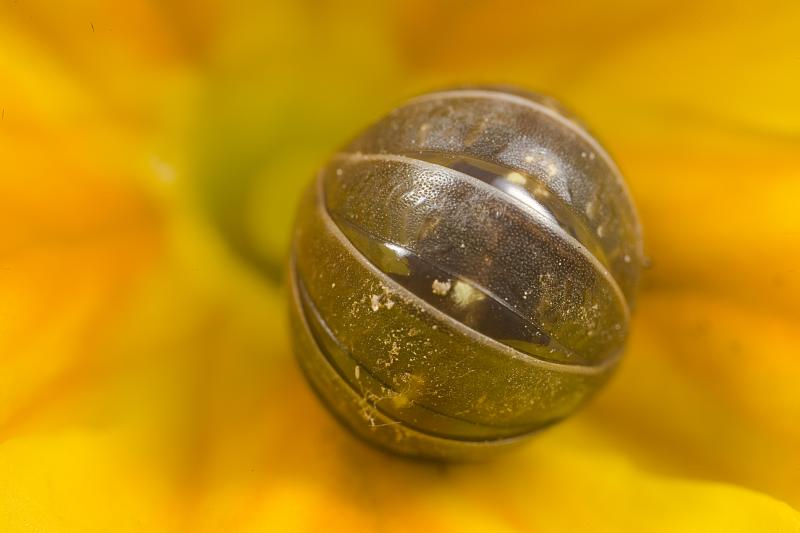
I had noticed incidentally among the myriad scurrying ants the many pillbugs who were partying big time in their own subdued way-- pillbugs love moist places too, and as everyone knows, pillbugs consume decayed organic matter. Turns out however that, unlike everyone, I didn't read the small print in the Pillbug Manual: pillbugs eat decayed organic matter and tender young shoots, such as my new impatiens plant, the lowlifes.

So my apologies to any of you ants who may have read my previous post; but just let me say for the record that I know you're guilty of something, so take a good long look at your lifestyle and try to turn your self around. You can start by getting those aphids off my peppers.

Now if I can find a cure for those little pills...

Tuesday, June 08, 2010


THE PROBLEM WITH NO STRAWBERRIES


Traditionally, my gardening opponents have been limited to the full range of insects and their countless friends, plus local deer, wild pigs, monkeys and crows, a bestial crew that has been more than sufficient to make the enterprise an entertaining one. My efforts to fence them out, threaten them with stones, scare them with snakes, shock them with bottle rockets etc. have earned me an extreme reputation among the local beasts, so I'm bothered much less than when I was just a new kid on the mountain. Plus the bugs and beasts themselves have taught me a great deal about their habits, dislikes and weak points, valuable information. So it's been a fixed range of opponents all this time. That's the problem with no strawberries.

This year, in a daring move to go where no me has ever gone before, I put in a couple of strawberry plants, much as NASA aimed for Mars. NASA got to Mars and I grew some strawberries that got redder and redder, which is a strawberry's line of work, so I put a net tent over the plants with the far end closed where it stretches all the way along the row to cover the new beans now sprouting (crows love bean sprouts, as I learned earlier in this history, and surmised that they would freak out over strawberries in the garden their human is planting for them).

With the nearer 'open' end screened by green pepper plants and tall parsley, I knew that crows, perhaps the least credulous creatures on the planet, who do not like nets at all, would not push their way through and walk along the ground into a netty underness, even to get at strawberries (if they could even spot them through the netting), but I did not know about the net-scoffing character of the brown-eared bulbul. Not growing strawberries can breed that kind of ignorance. Brown-eared bulbuls already know this.

I remained ignorant until I'd looked out the kitchen window a couple times while making lunch and saw a pair of brownears flying up out of the garden each time, which was strange, they never enter the garden regularly like that, sort of coming and going; what's more, there was something in the way the birds flew out of the garden that caught my attention.

The pair had that kind of furtive, purloiny look about them that science, cocooned in its latticework of logic, pooh-poohs as anthropomorphism, but that gardeners and pet owners know all about (for the record, let me state here that despite such shortcomings, science and its purveyors in many other regards deserve our respect and have a rightfully valued place in society). So, urged on by evidence of bulbul guilt, I went and looked at the strawberries and found that the reddest ones were pocked with brown-eared bulbul beak stabs and the soil below them was littered with strawberry banquet fragments.

The thieving pair stayed up in the cherry tree watching me and screeching their dissatisfaction at my fiddling with their strawberries - we found them, for godsake, bla-bla-bla - to the extent  of cutting off all the reddening ones and taking them into the house to ripen there, before securely netting the entire strawberry area.

So from strawberries I learned how to piss off bulbuls. Some kinds of knowledge are more satisfying than others.


Saturday, April 24, 2010


ONIONS KNOW ALL ABOUT IT


What with all this global freezing going on, here we are in mid-April building a fire in the woodstove to keep from shivering even with a sweater on, I bet this is what happened to the dinosaurs or maybe it swung the other way and got hot; on the other hand there might have been a meteor or it could even have been some kind of major dinosaur flu; whatever happened, the dinosaurs didn't have a chance, except the ones who could fly...

Onions are survivors too; they know all about this stuff. Even though rooted, they adapt on the fly. Which is why all my onions are now prematurely (from my point of view) sending up flower stalks, because they have been paying attention to the weather patterns a la their how many eons of experience and they're no fools, so our diet will be heavy on premature onions for the next few weeks, apart from the monkeys' cut.

As for us neodinosaurs - enraptured with sapience as we are - the upper ones talk a lot about global warming, bird flu and terrorism to keep the lower ones distracted, but the true problem with our modern interregnum is lack of Reality. Not the Action! Cut! reality as portrayed by the upper ones on Faux News or "reality" tv, or by the gladiators of today, action-packed movies and cage fighting - which make the everyday boring in the same way fast food makes true nutrition boring - but capital-R Reality, of the kind that love is and children are, that trees are, that play is. Birth and Life, Joy and Sorrow, Self and Death, that kind of thing. The actual stuff.

It takes a kind of unlearning, an undesiring, to get back to where we were when we first got here, to where we can once more look around and see what is truly there and what life time is, regain the mental status that flies in the face of everything disney, vegas, mcdonalds, survivor et al. stand for, in their respective variations on the Glitzy Premise: that we must suspend common sense in order to find joy and be nourished, that we must step aside and stop looking, stop being like little children, stop noticing the rips in the fabric, the man behind the curtain, instead have a big glass of coke and some fries, buy a ticket, make our bet, settle back on the couch to watch Transformer 42 so that when it's over we'll need more of the same, so that never having won, we'll have nothing to lose by the time whatever's coming comes, so who cares...

Next autumn I'm planting seeds, not sets. If onions can learn that much, so can I.

Wednesday, April 14, 2010


THE LIGHT


I had to slow down on the curve, which was why I noticed the monkey.

It was that curve behind the school, where the road turns sharply to the left on the way down to the station. As I slowed I observed a youngish monkey sitting alone atop the red roof of the school. The solo part was unusual, especially for a youngster, but even stranger was the way the monkey was sitting, as though in complete dejection; didn't even lift his head to look at the human passing by not so far away on a motorcycle. His pose was part Rodin thinker and part the guy sitting there head down, with right leg extended and left arm flung straight out across his left knee in a kind of exhausted despair.

In the simian part of myself, I took a good measure of delight in this. Seeing monkeys in unpleasant situations is a form of pleasure for a mountain gardener. But then my higher faculties jumped in with their righteous batons and moral direction signs and I felt the stirrings of sympathy, because perhaps I was beholding an early version of we humans ourselves, as the proto-human first raised his or her head to look upon at the world around and thought... Hey, I just had a weird experience in my head! What the hell was that? as the first iota of memory found its place, held on, stayed there, and knowledge was born in us: lo, we had perspective - time perspective, emotional perspective - there were tangents and pathways, there were decisions... and so the path led on, to roads, schools, motorcycles...

But this monkey hadn't reached that point yet, he was an early branch of us sitting up there alone in simian despair, perhaps hungry in a way he could not fathom; perhaps he had looked in the school windows yesterday and seen all those furless kids eagerly poring over books and symbols, learning about everything around them, but it wasn't even Greek to him; he thought what are they doing in there, why can't I do that and why would I want to-- then perhaps came the realization, in some proto-human way, that he could not get in: he did not have whatever qualifications were.

Monkeys can raise their eyes and behold the land and its character all around them, but it has no meaning, for they know nothing of topography, have no inkling of geography, history, biology, mathematics, all the human labels for humanly organized categories of monkey-useless things (no doubt an instantly sapient monkey would come up with completely different categories that better suit the simian mindset). The world that monkeys see is just as it is, without heuristic depth or duration, for they cannot build upon memories the way we do (to whatever end), not only because they don't desire to, but mainly because they don't need to. Which was our own status at one time, until it changed for reasons that can only be approached mythologically.

Sitting up there alone the young monkey looked as though he had just beheld for a brief moment what we call The Light, and then had lost it, could not hold onto it, as may have been - indeed, likely was - the case back at our own beginning, so as I passed on by I could not but commiserate, a little bit.

Hang in there, buddy; no matter what happens, just stay away from my onions.

Friday, February 13, 2009


SLOW LEARNING


Preparing my garden seed list puts me once again in mind of how much learning there is to be done, if you're out to get an education. The garden is just one example-- maybe the best example, apart from the University of Parenthood, which not everyone attends, though anyone can have a garden.

The most valuable experience the garden imparts - aside from the miraculous lessons of seeds and growth - is the exercising of slow knowledge, which seeds already know and so do you, deep down in your roots, the kind of knowledge that doesn't move before it's time, knowledge you can't recall if hurry is your way of life.

This is the same lesson that children, grandchildren and the face in the mirror teach to whomever takes the time to stop and see. So it is with a garden: you go out to the earth and you genuflect. Like a child, the earth requires that you come to its level.

In fact you are kneeling to your own future roots, where at the moment there may be weeds or bigger things; then you clear and till, seed and tend, then weed and nurture again in the various ways that growth demands, you watch the sky for rain and protect the stalks from wind, much as you do in their ways for those you love and for your regular people relations, except this is between you alone and all the earth and sky.

The big lesson is about time: not what it is or what it means, but what of it is yours and what to do with it, how to fill it and apportion it, how not to yearn to do everything at once, as desire wants. Those remaining unseeded or unweeded rows call to you for tending even at the end of day, but you will do it tomorrow, and you do it tomorrow, and over time you slip into the time of the garden, much as you're slowly growing with the firewood stack.

Slow is the key, slow at the core, a bit of each in its time and its way, as you learn how to advance at just the right pace to achieve continual progress at a healthy measure for body and mind, have everything converge at just the right points along the seasons, and therein discover a new pleasure for your days, one that was never thought of back when you were racing through youth like a tomorrowless comet-- what delight was waiting ahead after all, just beyond the row of carrots...

You've learned what is called slow, to go at the speed of nature, to move naturally at the pace your deeper heart desires, a pace we have forgotten in our virtually advanced societies, but not in our hearts, bones and spirits, a pace and its attendant knowledge that is still and always there, waiting for us each to slow enough to seek and see it, get in deep sync and realize it once more in humanity's long garden-- and how you learn, then!

If you're out to get an education.

Friday, January 02, 2009


THE OLD TABULA RASA


In the evolution of knowledge, it's a fact that things keep on becoming unknown. I'm not referring here to elective rasafication of the tabula, as for example by creationists, or to the natural misplacement of knowledge, as embodied in where the hell I put my reading glasses, which is sort of a pro tem microrasafication. To get more rapidly to my point here, I'm talking about how each generation is born bearing the somehow surprising absence of such basic knowledge as seeds and how to use a rake.

When you're raising kids, you try to teach them moment-to-moment about all the things they need to understand or at least know about, from the toilet to the stars, so you never really get to comprehend the particulars of it all, just how much and in what detail they have to learn these things, and so you miss a few, especially the things you'd never even think of teaching anything about, such as will dad's favorite fountain pen write on toast, or how many times can you put a ball in a box and take it out again. These details too must be learned. (Bet you didn't know you'd learned somehow about fountain pens writing on toast.) Though it's been dismissed as an ignorant representation of the newborn mind, the old tabula is nonetheless surprisingly rasa in certain respects.

When Kasumi was born in on the island of Ibiza, the first thing I did when we took her home was carry her out into an old grove near our finca in Cala Boix, break off some wild rosemary leaves and hold them to her nose. She was only about three days old, but I still remember the look of awe that came into her eyes; no rasa there at all (three-day olds are experts at awe).

On the other hand, I remember one day in spring a few years later when we lived in Kyoto and only Keech and I were home, when I said Hey Keech - who was then about three years old - let's go water the daffodils! We got a big glass of water and went out there and I let Keech do the watering; he held the glass up to the daffodil's mouth so it could drink. Way cuter and more endearing than knowledge. Imagination is a beautiful thing.

When decades later I became a grandfather I got Kaya started early learning about plants and seeds and gardening - she'd help me plant whatever I was planting while she was here - but I guess that somehow, due to seasonal scheduling and time crowding, Mitsuki and Miasa slipped by in that regard-- they haven't yet gotten to be here at planting time. Then yesterday afternoon I took the three of them out to help me pick some winter carrots-- partly for thinning, but mostly for the major WOW I knew it would be for them to firmly grasp those green stems near to the ground, pull hard and come up with a large bright orange root right out of the dirt! (We filled the carrot basket to overflowing but still it was Me, me, me, I want to pull up the next one! and for the first time in my life I was a grandfather seeking order among carrots.) Then we took the whole basketful of green and orange to the garden hose, where we washed the carrots off, and boy were they bright orange when I held a freshly washed bunch of them up in the air-- it was the roots of impressive.

This was of necessity followed by the eating of cold, crispy, orange-glowing baby carrots in the warm kitchen-- what can be mind-sweeter than new teeth crunching into a carrot just plucked from winter ground and washed with icy water? For some time the kitchen air was filled with carrot snaps and contemplation. The crunching trio wanted to eat all the carrots right there, but agreed to take some home for later.

The surprise I've been getting to all along came when Mitsuki asked me why I had buried all those carrots.

Tuesday, December 02, 2008


THE SUMMER OF OUR DISCONTENT RAMBLE


Here it is December already and there is no snow on the mountains, the oak tree still has green leaves on it, we haven't had a single frost and my potatoes think they're in Hawaii, despite the black hole in the world economy. I too, when I'm working outside, am soon down to my t-shirt when it should be snowing, and as I work I have the distinct feeling that glaciers are melting, ice sheets are shattering, polar bears are disappearing and Eskimos are developing beachfront...

Of course it could all be just a centurial anomaly or something, as the folks who know as little as anyone else insist; besides, what do we mere mortals know about the history of anything, really, short term as we are, just a few gossipy fragments of surmises here and there written down as gospel, either way we don't really know what we're talking about, we can't even explain our own desires or the ice ages, or even the words we say about them, though our minds know more than we do.

The puzzles nevertheless are ongoing, like the strange lack of acorns and other nuts (excluding human) in the northeast US this year, and the disappearance of tuna and sharks from the sea and certain birds from the sky, what does our knowledge really know, the sun's getting weird, the solar system prefers to be alone, the galaxy is acting quirky, galactic clusters are accelerating away from something, space is bent and now they've sensed some strange attractions from outside the universe as we call it; so what else is new, is this all normal, are we having guests, should I put my shirt back on?

Wednesday, December 26, 2007


THE RAIN GUTTER DIALECTIC


From as far back as I can remember, I have always been hungry for knowledge about the infinite aspects of this universe, starting with the earliest queries of my infancy: Where the hell am I? and Why are women so fascinating? and growing on from there, ever hungry.

One bit of knowledge I've recently felt the need to acquire is how to clean rain gutters only when the sun is shining. This desire only arises whenever I'm cleaning the rain gutters with rain cascading in my face, running up my sleeves, down my neck and into my boots as I stretch out to full length and height there on the wobbly ladder in the multidirectional wind-driven downpour, my wife affirming my knowledge-hunger by stepping gingerly out into the skytorrent -- while I have one leg on the top rung, the other leg on the slick deck railing, one hand on a slippery roof tile and the only remaining hand scooping leaves and cedar needles out of the icewater-filled rain gutter -- and asking from beneath her umbrella: Why do you always clean the rain gutters when it's raining?

Somebody must have asked Socrates that question. They didn't teach rain gutter in college, and I never had a house to learn from until this one; we always rented and moved a lot when I was a kid, so all you guys whose fathers made you clean the rain gutters all those autumns while I was gloating at football or baseball, go ahead, you can gloat now.

The thing is, every time I'm out in the sun I'm not looking at any rain gutters, I'm looking at the light from the blue sky or the dark nourishing earth or the vital seeds I'm planting or the shiitake logs I'm drilling or the firewood I'm splitting or the monkeys I'm chasing or the delicate sprouts that need weeding, mulching or support, I'm not gonna drop everything that needs doing right now, as the sun slides nonstop down the sky and time is wasting, to go and get the ladder and lug it around the house and set it up here and there and climb up and check to see IF the rain gutters need cleaning, are you nuts? As soon as it rains I'll know whether or not the rain gutters need cleaning.

So that's the answer, it comes to me like a face full of rain, just as it must have for Socrates: as there is a time for all things, so there is a time for knowledge, and some things are just not worth knowing until it's time to know them. And so it is with rain gutters. But how can I possibly explain that to my knowledge-hungry wife under her umbrella as I hang there in the rain grasping a handful of wet leaves?

Socrates is silent; he seems to have something under one of his fingernails...

Saturday, May 19, 2007


KNOWLEDGE RULES!


If you'd asked me yesterday what I thought of hairy vetch, I'd likely have backed away and looked at you suspiciously. If you asked me the same thing today, I'd conclude you were a knowledgeable gardener. Interesting thing about knowledge, how rapidly it transforms one's opinions.

This morning I was looking at that prolific plant whose face and pushy manner I knew so well from lo, these many seasons - but whose name I knew not - that each Spring pops up after the cleavers and chickweed have gone and grows all over my garden and flower beds clearly wanting to take over-- I found it thriving in the corner of my front flower bed and made a note to myself to later get the hand scythe and clear it out of there, then I went online to find out what the nasty, pushy stuff was: appropriately, it was named "hairy vetch" (vicia villosa).

The pictures were accompanied by this text: "In the course of these 18 years study, we ... screened more than 2000 plants and found potential allelopathic plants useful for sustainable agriculture. From the potent allelopathic plants, we isolated several new bioactive chemicals and some of them were patented. As for direct application for the farm, Velvetbean (Mucuna pruriens) ... and hairy vetch (Vicia villosa) ... are now gradually spreading as allelopathic cover crop in Japan and in some other parts of the world. Hairy vetch is now accepted by Japanese farmers and recommended as cover plants for the vegetation control of fallow, abandoned field, and orchard."

Then I opened my email and found this in the Organic Gardening newsletter from Rodale: "If you love the flavor of juicy, ripe, home-grown tomatoes—then remember these four simple words: Sow! Cut! Plant! Pluck! These magic words are the key to "can't-miss" tomatoes that require virtually no weeding and hardly any watering—and they give you red, ripe tomatoes sooner than you ever imagined! The "hairy" secret is hairy vetch—a miracle plant used by farmers all over America to build the fertility of their soil. The trick is to sow this nitrogen-boosting, soil-protecting plant in the fall. Cut it down two weeks before you set out your tomatoes. Plant your seedling in a hole you cut in the dried vetch. And pluck the best no-work tomatoes you ever grew! It's as easy as 1-2-3-4! The thick vetch will smother any weeds that would even dare to pop up—and it helps keep soil and your tomato plants nice and moist!"

When sapience rains on my head, it pours! Now I'm not only going to let that wonderful plant Hairy Vetch - that miracle plant with the wonderful name - stay where it is and proliferate, I'm going to save its precious seeds and plant them as my garden ground cover in the fall.

Knowledge rules!

And the monkeys will love my tomatoes.

Saturday, July 06, 2002


SCOOTER ENTOMOLOGY

Underwent radical excision of residual urban pride last week when on Monday morning I went out to start my new used scooter and go down to the station and the scooter wouldn't start; wound up calling the shop in the city where I'd bought it, he said sounds like water in the gasoline. Tried everything, sampled the gas, looked in here and there, checked it all, no go, so as the next resort took it to a local shop in the country where the guy tried it a couple times, then in lieu of something technical, STUCK A LONG WIRE INTO THE EXHAUST PIPE (for crying out loud, these country mechanics, when it's water in the gasoline!) WIGGLED IT AROUND AND PULLED IT OUT (some kind of hayseed dowsing hocus-pocus?). Out fell two fat green caterpillars, stashed in there by hunter wasps as food for their eggs in the nest they had built in the muffler over the weekend, leaving it blocked by Monday. The city shop guy never thought of this because there are no hunter wasps in the city; the country shop guy thought of it first thing, said it happens all the time this time of year, and more this year than last. He got the caterpillars out and it started at once. Thus it turns out that in repairing motor-driven vehicles, it pays to have a little entomological know-how. I see just a little bit better now how it all ties together, and how when it comes to the country there're a lot of holes in what I used to think was knowledge.