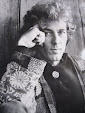
OTSU INCIDENT, PART III: THE MYSTERY DEEPENS

Well, as if directed by the hands that led us through the maze to the grave of Ernest Fenollosa, on this try we made it in no time at all to the very conveniently located and amazingly accessible Otsu Museum of History to see the Otsu Incident exhibition, which you know all about if you've been following this, and if not, we'll wait here while you go back and catch up.
The exhibition was all we expected, and extremely fascinating as history. Prince Nikolai (on left in poster above) and his cousin Prince George of Greece were given the grand tour on that day in May 1889: rickshaws from Kyoto, a tour past the transport canal that goes through the mountain to Kyoto, a steamboat ride out on the Lake to view the famed ancient pine of Karasaki, then back to Otsu where they toured an expo of local products at city hall and George purchased a fine rattan cane.
Then on through the city (very narrow streets, head-high roofs...and no electric poles!) in rickshaws heading back to Kyoto, when Nikolai was attacked by the sword-wielding Japanese policeman (photo on right above), the rickshawmen deflected the blow, and everybody rushed to subdue the attacker, George beating him with his new rattan cane. Then, according to the exhibition, Nikolai was taken to a kimono fabric shop right at the scene, where he was treated for two heavily bleeding but rather superficial wounds to the right side of his head. The attacker (who had struck because he believed Nikolai was reconnoitering for a future invasion by Russia, a not uncommon suspicion at the time) was then taken away and jailed nearby.
The point of the exhibition, however, was that, following imperial family demands for the attacker's immediate execution, several radical lawyers called for a standard modern legal approach and won out, thereby beginning to wrest the Japanese legal system from imperial dominance. According to exhibition data, the attacker died in the same prison a few months later, of pneumonia. The exhibition showed it all: the endless paperwork involved, the princely visaless passports, detailed maps; photos of the princes, the then-mayor of Otsu City, the governor of Shiga Prefecture, the conservative lawyers, the radical lawyers, the kimono shop owner with his imperial medal, the nationally famous superhero rickshawmen wearing the medals awarded by the tsar and the emperor (they also received huge rewards and generous pensions); the actual sword, the bloody handkerchief with a small bit of the corner clipped off (for forensic DNA research on the findings at Ekaterinsberg), the rattan cane, even the original sign from the shop where the rattan cane had been made, but not one single photo or mention, not one word, of Doctor Usui. Strange. I had been looking specifically for further details regarding the story of this hero who had, according to his own version of events, practically saved Nikolai's life, and there was nothing. Even the leading radical lawyer's wife's photograph was there, but nothing of the good doctor. Re-reading Doctor Usui's story, I note that he says (automatic translation): "It [Nikolai] had been transported in the hall of a hotel in the vicinity... I spontaneously placed then my two hands on the left side of the head of the patient and directed my intra-psychic perception inside the wound." Hotel? Left side? Was he actually there? Was the good doctor... the founder of Reiki... indulging in a bit of creative imagination? If not, why was he left completely out of the exhibition? The mystery continues...


 the most seminal western scholar in Japanese history, and recipient of the highest imperial honor ever bestowed upon a foreigner, among his countless other honors and accomplishments. And here he was resting almost a century now in this very quiet and apparently little-known place. The man was a hero in my own past; countless times I had seen his name in just about everything I'd ever read about Japanese culture. Indeed, part of my reason for being in Japan could be traced back to him and his work. Among many others he influenced Hearn, Pound, Yeats, all the way up to Rexroth, Ginsberg, Kerouac, Snyder in our own day, the list lengthens and widens and his influence goes on. Yet with all my time in Japan I never even knew he was here, at this now declining and unvisited temple that he loved for its beautiful view.
  (He had become a Tendai Buddhist at this temple (imagine the radicalness of that in Victorian times!!), and spent much time here.