Showing posts with label nuclear power. Show all posts

Tuesday, July 31, 2012


FRESH CURRENTS: FREE DOWNLOAD

Kyoto Journal/Heian-Kyo Media's latest special publication, on Japan's present and future energy policies-- released on the day angry citizens surrounded the Japanese parliament buildings to demand an end to nuclear power.

"Fukushima has raised, once again, the perennial questions about human fallibility and human frailty, about hubris and man's arrogance in thinking he can control nature. The earthquakes, the tsunami, the meltdown at Japan’s nuclear power plant are nature’s reminders of her power… Alternatives to nuclear energy are a thousand times more abundant and a million times less risky. To push nuclear plants after Fukushima is pure insanity."
— Vandana Shiva


Tuesday, January 10, 2012


NUCLEAR POWER GUINEA PIG

Headline: Shiga studies impact on Lake Biwa from possible Fukui nuke accident

I've written about this fact before, but it's seldom floated in the standard mediastream and so gets forgotten even by the Japanese: Japan, for its narrowness, size and seismicity, is truly the world's Nuclear Power guinea pig.

As you look at the map, simply center that big green circle on Tokyo, and the cities of Tokyo, Osaka, Nagoya (urban area population exceeding 60 million persons) and Kyoto (a few million more), not to mention priceless Lake Biwa (centrally just below the Takahama-Mihama cluster!) are within a short breeze of over 30 nuclear reactors!

Given the world-witnessed occurrence of the statistically impossible event at Fukushima, the potential result of this situation is truly beyond rationale. Yet these millions carry on, living in the shadow of another series of statistically impossible events that would pretty much bring an end to Japan: for most, if not all, of those who survived would have to be evacuated. To... where?

As much as I love and worry for Lake Biwa (where I live), things would be so much worse (especially if they ever start the Monju reactor) than what the authorities' experts are intently studying...


Wednesday, July 27, 2011


SPECIAL REPORT-Fukushima long ranked Japan's
most hazardous nuclear plant

"Japan's Fukushima Daiichi nuclear plant ranked as one of the most dangerous in the world
for radiation exposure years before it was destroyed by the meltdowns and explosions...

After the earthquake, contract workers at Fukushima were sent in without radiation meters
or basic gear such as rubber boots. Screening for radiation from dust and vapor inhaled by workers
was delayed for weeks...

But that kind of stepped-up review never happened in Tokyo, where the Nuclear and Industrial Safety Agency remains an adjunct of the trade ministry charged with promoting nuclear power...

Because of Fukushima's high radiation, Tokyo Electric brought in thousands of workers each year,
often to work just a few days on the most hazardous jobs..."


Thursday, June 23, 2011


A RADIANT PROPOSAL

"It's the only way to secure a stable supply of environmentally clean electricity at a relatively low cost," Mori, who also heads the Kansai Economic Federation, the biggest business lobby in western Japan, said last week in an interview in Osaka. "Nuclear power should keep its current status." No agendas there...

That current status includes Three Mile Island, Chernobyl, Monju, Fukushima, among others; nuclear statuses tend to last a while. Anyone who had a resume like that would never get a job. But what do we misled and newswinked members of the public really know about this complex subject? If what you say is true, though, Chairman Mori, why not build your next big reactor right in the center of Tokyo? And one in Osaka! Every large city in Japan should have the safety of radioactive warmth at its heart! You could make use of the rivers! Apart from all the macrosieverts of stability that would radiate outward, this would yield tremendous cost reductions by eliminating electricity loss via distant transmission! And in the gentle embrace of nuclear power's radiant cleanliness you could have kindergartens right beside the containment vessels-- with playgrounds, neighborhoods, restaurants all around! Food gardens! You could even eat the fish!

Rumor has it that Chairman Mori plans to move to Fukushima with his family, unto the seventh generation, to be as close to the reactors as permissible - outside the expensive and toxic forced evacuation area - to reside among his aggrieved customers amidst the glowing ambience of radioactive safety and prove to the world how environmentally clean and how stable is nuclear power.

Any word on that moving date, Mr. Mori?


Friday, June 10, 2011


ON LITTLE PINE BEACH

On Wednesday afternoon I took the beach-hungry beasties to our favorite secret beach, called by us Little Pine Beach, where on that ultrafine calm blue feather-clouded day the four of us got out of the car at the end of the long narrow road to the sand and water about a hundred meters or so away. When I turned around after getting my bag from the trunk, there in the far distance, arms raised in glee, were three tiny silhouettes already screamsplashing into the calm water...

I headed at a slow pace along the hundred meters or so to the beach, and when I was almost there remembered the beach mat in the trunk so turned and walked the hundred meters or so back to the car, got the mat and walked the hundred meters or so back to the beach where I realized that since school was in session, the season does not begin for about another month and there WAS NOBODY ELSE THERE WE HAD THE ENTIRE BEACH TO OURSELVES!
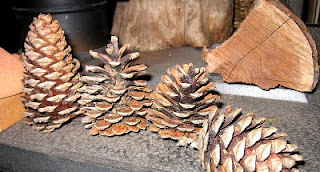
As I spread the mat amidst the joy I couldn't help but notice that beneath the many little pines were strewn about seven million pine cones, perfectly seasoned for starting fires in a woodstove, and there's only one household I know of around here that has any such need for pine cones. Everybody else uses nuclear power. Even better, these were free pine cones, with no meltdown.

But no way would (or could) I ask the girls out of the water when the swimming was perfect, even to gather also perfect pine cones just lying there waiting to be claimed by this lucky winner of the Pine Cone Lottery. No questions from the press, please. So I alone jumped right on the pine cones, but I only had my small back pack and a little plastic bag of the kind they make that holds maybe two pine cones, go figure. And it would rain before I could get back here on the weekend... What's that old saying about Lord, thy pine cone-covered beach is so vast etc.--

So I walked the hundred meters or so back to the car and was lucky to find some large plastic bags that we sometimes have in the car for wild vegs, fruits and herbs, walked the hundred or so meters back to the beach and commenced harvesting pine cones by ones twos and threes in the mango gold of the late afternoon as the girls splashed in the shallows and a powerboat roared aimlessly back and forth offshore, playing music of the kind that requires volume to offset some central emptiness, the roarers seeking in the midst of nature's beauty to somehow drown out her insistent presence in a dull version of fun that seeks distraction from what it will not see and does not want to understand. Unlike the girls, who in their bigger world were fashioning beach toys and houses from bamboo and sandpiles, having deep fun with water and earth-- no boat, no motor, no fuel, no blasting along the surface, no costly layers of separation from what is, bottom line, the ancient part of ourselves.

And so as the girls played in all that majesty I bent to my task about 500 times, wandering not bent/bent/not bent/bent along the shore beneath the pines, gathering only the finest cones - one becomes a pine cone gourmet of sorts after a few years - strewn there by the hurricane of a few days ago and normally soon raked away and burned by the beachkeepers, but the season hasn't begun so I was doing them something of a favor, and I must say I haven't seen such a fine crop of pine cones in all my years here, they were that golden amber of the fresh unweathered kind-- I got 8 big bulging bags full.

Later, after a cooling loll on the shady sand, as it approached time to leave - me wearing my white hemp pants, orange NYC t-shirt under white shirt w/long sleeves rolled and straw cowboy hat with the silver concho on the front - I gathered up three big bulging bags of pinecones in each hand and headed back the hundred meters or so to the car through the narrow alley. On the way, I passed three young Japanese males heading for the beach, who, upon beholding way out here in the middle of nowhere - japanopublicly speaking - a tall, long-white-haired elder gaijin striding along in white pants, white shirt, orange NYC tee and conchoed straw cowboy hat, carrying... three big bags full of pine cones in each hand... it changed their worldview somewhat.

When I walked back the hundred yards or so to the beach to get the other bags of pine cones and carry them the hundred yards or so back to the car before coming back the hundred yards or so to the beach to gather up the girls and their stuff and walk the hundred yards or so back to the car to head home, I saw the young men still standing there on the sunset beach like the enigma in a De Chirico painting with some loud rap music drifting over the water, puzzled to have come to a long beautiful beach empty but for three little girls, and additionally puzzled at major pine cone haulage by a strange foreigner from NYC... It was an odd day, I could sense them concluding at their unsought insight into the inspirational sources of the surrealists. It got even more surreal when I took the three little girls away with me.

Life can get interesting on Little Pine Beach.


Wednesday, June 08, 2011

+
Japan doubles initial estimate of nuclear radiation

A great many suspected the truth all along, but not Tesco and the government. In the light of their sudden wisdom, the authorities also pledged to make the country's nuclear regulator (Nisa) independent of the industry ministry, which, as it happens - who could have noticed - also promotes nuclear power. That should have been a no-brainer back then, when brains were as abundant as they are today. Wonder what they used instead... 

+

Fukushima nuclear plant may have suffered 'melt-through', Japan admits

Fuel rods have probably breached containment vessels – 


Friday, May 13, 2011

 
NUCLEAR MELTDOWNS CAN BE HARD TO NOTICE...  + +


"One of the reactors at the crippled Fukushima Daiichi power plant did suffer a nuclear meltdown, Japanese officials admitted for the first time today, describing a pool of molten fuel at the bottom of the reactor's containment vessel."

Monday, December 24, 2007


POWER


via Celsias
But don't despair, home nuking is just around the corner... [link fixed]


Monday, October 22, 2007


ALL THE THINGS THAT AREN'T PINECONES...


Woodstoves and fireplaces can mean a lot of work if you clean your own chimney and chop your own wood, but the reward is more than the bliss of having a warm fire in your living room; it also inspires you to go out to splendid places you might not otherwise go to at odd times, and do there things you might not otherwise do.

Like yesterday morning, when Echo and I went to Omimaiko, the small but elegant peninsula with the long pine beach, slightly north of us on the lake (we can see the tip of it from our deck) where we walk, swim, picnic and watch fireworks at other times of the year, but this time it was to gather pinecones (excellent firestarters, and free). We'd gone to a different place further north the day before (nice beachside restaurant up there), but the trees in that vicinity are of a selfish variety and keep their cones to themselves. Even the wind didn't shake any down.

The big old pines on Omimaiko though, are much more generous, and their largish, well-dried pinecones were already scattered everywhere on the sand awaiting us, with no one else seeking the treasure just lying there like a spilled cornucopia. More and more folks here in Japan nowadays use atomic electricity to heat their homes, and are not inspired thereby in any noticeable way.

Anyhow, it's interesting being thus nicely coerced into gathering pinecones in the piney shade along a bright beach on a sunny, breezy morning, getting to know the trees and their territory first-hand, bending to pick up treasures here and there (getting to know the properties of your own back, as well) and acquiring a decent eye for a good pinecone (it's an art), learning to filter out everything that isn't a pinecone, which effort in its humble way is excellent practice for modern life and the attendant growth in multiplicity of things that aren't pinecones.

Like all the best undertakings, pinecone gathering also has the pleasant savor of eccentricity about it, as pertains to going around under trees while bent over holding big bags and putting pinecones in them. Passersby wonder at the sight; new conversations begin. Aesthetically attractive as pinecones are, they're generally not much use to anyone except kids, who love to gather them, throw them, stack them up in situ and take a bunch of the best ones home to find years later in the closet. So there's a being-a-kid aspect to it, too, which is always welcome to the kid that cores the elder.

In any case pinecones are not so attractive or useful as to have people walking around gathering them by the bagful as we were, the two of us alone, on that long beach; we soon had two big bags full to overflowing and then began to fill our pockets until all we had was our hands and they were full too, because as with any other bargain in life, once you get going on a superior freebie like pinecone firestarters to use on the coming cold winter mornings - when you bend to a cold stove in the early darkness and light a small cluster of pinecones beneath some cherry kindling and the flame catches, the fragrance rises, the fire grows to give you warmth and light - all vested there in the pine-tree largesse of amber cones scattered at your feet like so many treasures of the future, the little gifts take on a magical appearance and it becomes difficult to walk by a prime golden specimen just lying there looking at you with its arms spread wide and not pick it up, to walk right by a gift of the pine gods...

By the time we were retracing our steps back to the car, though, the wind had gotten a lot stiffer with the growing warmth, the pines were shaking and roiling their furry arms, having a grand green time and being even more generous, practically emptying their pockets in their delight at the day: the large underpine area we had already cleared was once again a gold mine of new-fallen pinecones that we had to walk through with pinecones already coming out of our ears. Interesting anguish, not being able to pick up another perfect pinecone!

But we have more empty bags at home...


Wednesday, July 18, 2007


WIND, RAIN, QUAKE, RADIATION


As if the wind and the rain weren't enough, Niigata had its second severe earthquake in three years, stronger-feeling than the last one, many say; it caused 9 fatalities and 1100 injuries as reported thus far, collapsed many old houses and caused numerous landslides, aggravated by the past weeks of heavy rain.

There was also a fire at the Kashiwazaki-Kariwa nuclear facility (near the quake epicenter), the world's largest nuclear-output power station. From what I saw initially, the blaze was just a transformer fire external to one of the buildings, nothing to worry about. In traditional Japan Atomic Energy Agency style, it wasn't revealed for some hours that there'd been a minor radioactive leak of mildly radioactive water from some waste barrels into the sea. Then it was announced the next day - far too late for anyone in the region to flee, had that been necessary - that more than 50 incidents of damage or malfunction had occurred - including radiation leaks, burst pipes, fires and the other usual whatnot of deadly radioactivity. If the past is any example, there's more to be revealed.

My in-laws live in Nagano, the next prefecture inland from Niigata; they also felt some tremors, though nothing major; Kasumi and family live in Saitama, another couple of prefectures away, where they felt the quake as a long slow wave motion, no damage there, though Kaya and the twins got scared.

One wonders, however, how much time they and those nearer the plant would have had for escape, had there been a major nuclear accident announced a day after it occurred, with details provided some time after that. Like all Japanese nuclear power plants, Kashiwazaki-Kariwa is built to withstand an earthquake force of 6.5, which was not enough protection from this 6.8er - especially for a facility built on a major fault line, as are so many (all?) of Japan's 55 nuclear reactors (wisdom knows no bounds) - so now the radioactivity people are talking about upgrading to maybe 6.9, but as we know, earthquakes can go a lot higher-- and it would only take one biggie to give Tokyo a radioactive half-life of a few hundred years.

It was even scarier to learn that:
"The other Japanese reactor scheduled to load MOX [plutonium] fuel is Kashiwazaki-Kirawa, in Niigata prefecture, in western Japan. However, Niigata governor Ikuo Hiroyama yesterday told reporters that Kashiwazaki 'won't be the first to load MOX fuel' in Japan, indicating it would not use MOX fuel until after the reactor in Fukushima."

If a future plutonium-loaded Kashiwazaki-Kirawa should crumble to a glowing cloud in a big quake, the entire country would have the privilege of being the world's biggest Chernobyl - only this time with a plutonium half-life of 25,000 years - to say nothing of Japan's new historic renown as the world's only uninhabitable nation.


Monday, June 05, 2006


NOT IF, BUT WHEN


As a person who is not yet radioactive, I feel that the primary approach to resolving Japan's energy problems should involve lifestyle simplification and education, coupled with all-out support for research and development of alternative clean energy sources.

But then my thoughts are affected by the facts that the Japanese government, the world's longest single-party rule, is enthralled by nuclear power (a bottomless public works pork barrel), that tiny Japan has the third most nuclear power plants in the world (53, after the US and France [Addendum, July 2007: now second in the world, with 55]), that Japan is one of the most earthquake prone nations on earth and that of those 53 quietly seething nuclear facilities, 13 (and 2 in planning) are clustered together on the Japan Sea coast within a few dozen kilometers of my house. And immediately upwind of 30 million other people.

The extent to which the use of nuclear power in Japan depends on public ignorance and corporate-government callousness is apparent in these two articles:

"Of all the places in all the world where no one in their right mind would build scores of nuclear power plants, Japan would be pretty near the top of the list.

When I asked ERC [Emergency Response Center] officials how they planned to evacuate millions of people from Shizuoka Prefecture and beyond after a Kobe-magnitude earthquake (Kobe is on the same subduction zone as Hamaoka) destroyed communication lines, roads, railroads, drinking-water supplies and sewage lines, they had no answer."

***

"It was clear that most Commission members were either pro-nuclear or felt that to encourage spirited discussion of basic issues like the necessity of nuclear power was not part of their mandate. After all, they had a five-year plan for Japan's nuclear power industry that they had to compile by late 2005, and since nuclear power was already providing about a third of the nation's electric power needs overall, what was the point in arguing with people who didn't want it? The result of the meeting was not a lighthearted farce, but something that looked as rigged as a pro wrestling match.

And so it was. Just a few weeks later, on November 12th, the Atomic Energy Commission released an interim report on nuclear fuel recycling and concluded that it should go forward. Virtually none of the facts presented by the anti-nuclear activists were acknowledged. But when it comes to Japan's nuclear power industry, inconvenient facts often do not matter."

Am I glowing yet?